TROON NORTH SPRAY FOAM ROOF REPLACEMENT
This North Scottsdale project involved the complete removal and replacement of an existing spray polyurethane foam roofing system on a custom home in Troon North. The residence has approximately 5,476 square feet of low-slope roofing spread across nine roof sections, with extensive parapet walls, penetrations and drainage points throughout the roof.
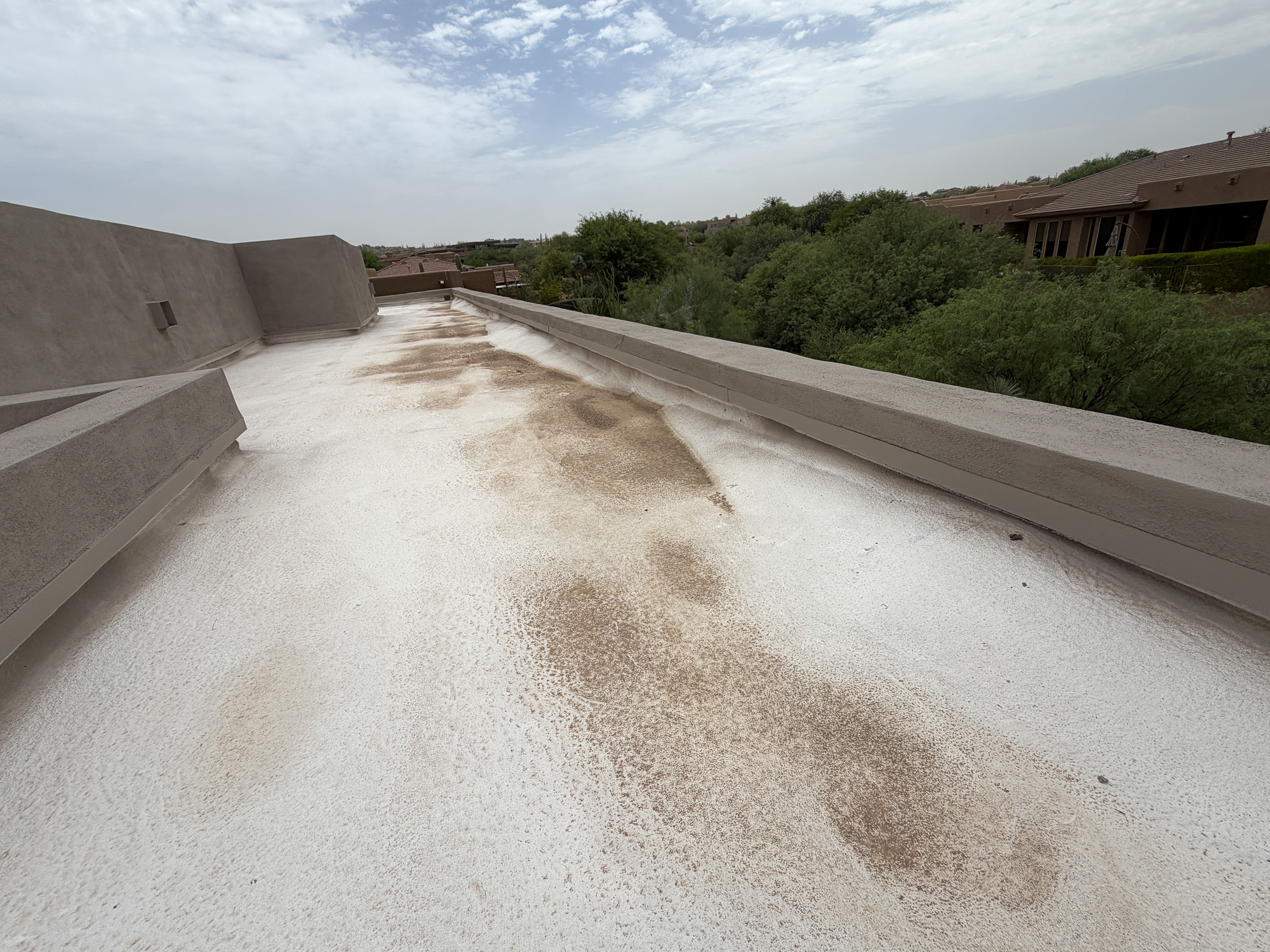
The existing SPF roof was not particularly old, but its condition told a different story. During our evaluation, it became clear that the primary issue was not simply an aging coating. The original foam had been installed with significant low areas that were preventing the roof from draining properly.
Why the Existing Spray Foam Roof Failed
Spray foam roofing is field-applied, and a properly installed SPF roof is not expected to look perfectly flat or machine-smooth. Some texture and minor variation are inherent to the system, and small isolated areas of temporary ponding can occur after heavy rainfall.
What we found on this Troon North roof went well beyond that.
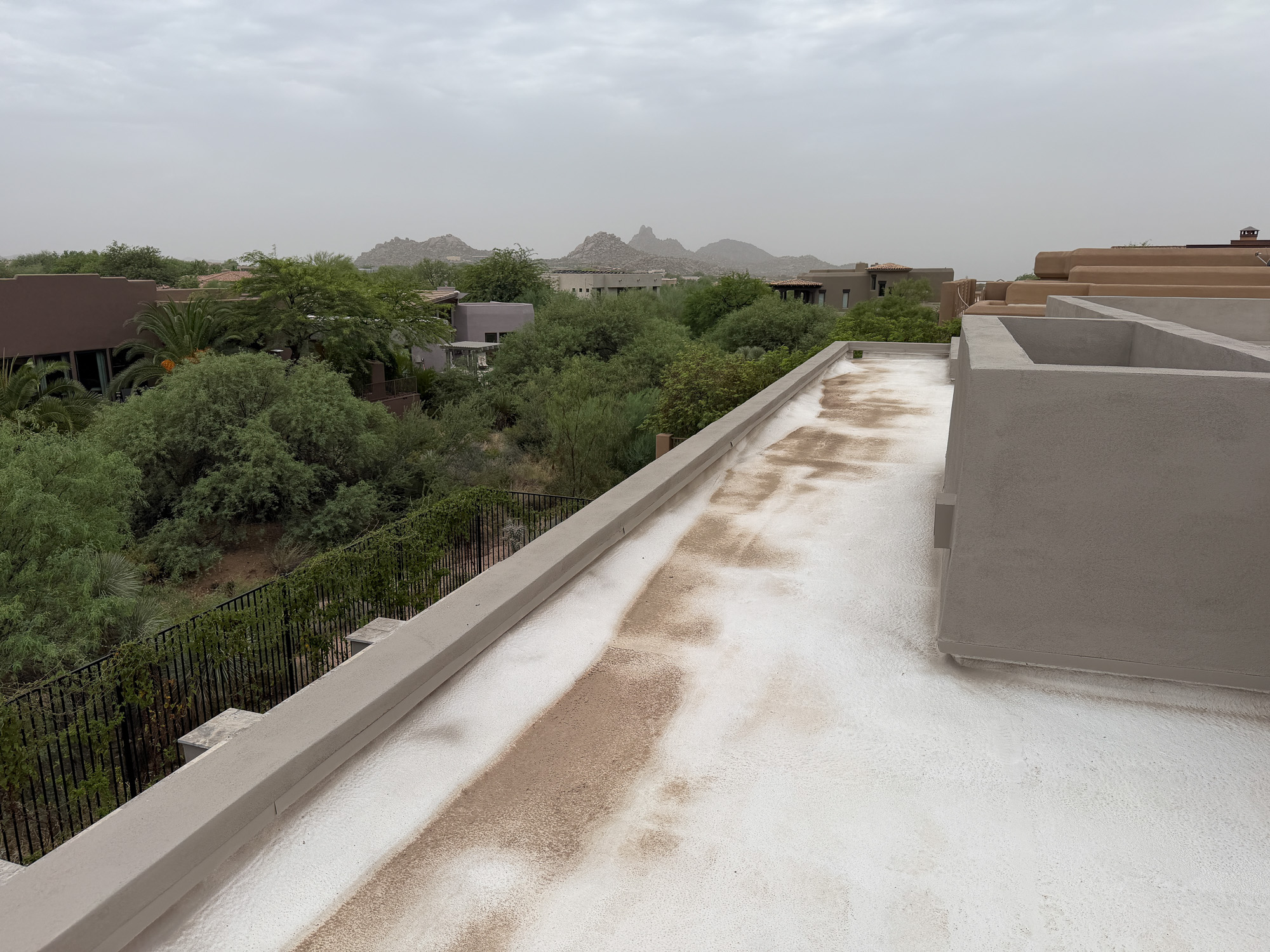
Large portions of the roof were holding water because the existing foam profile did not consistently direct rainfall toward the intended drainage points. Instead, water was collecting across broad low areas and remaining there long after the storm had passed.
Arizona workmanship standards recognize the difference between minor temporary ponding and an actual drainage problem. Limited ponding can be acceptable in small areas, but the roof should be dry within 48 hours after rainfall. Persistent standing water beyond that period indicates a condition that should be corrected to provide proper drainage.

The evidence was visible even when the roof was dry.
Repeated ponding had allowed windblown desert dust, sand and fine debris to collect in the low areas. Each time the standing water eventually evaporated, much of that material remained behind. Over time, substantial deposits developed in the same locations where the roof was struggling to drain.
That buildup was more than a cosmetic problem. It gave us a clear picture of where water had repeatedly been sitting and how often those areas were being exposed to prolonged moisture.
The protective coating on an SPF roof is critical. The foam creates the seamless roofing profile and provides insulation, while the coating protects that foam from ultraviolet exposure and weather. When drainage is poor, the coating in those low areas experiences a much harsher environment than the surrounding roof.
Instead of getting wet during a storm and drying shortly afterward, those areas remain wet for extended periods. Sediment settles into the standing water, moisture stays against the coating, and the same sections of roof go through that cycle again and again.
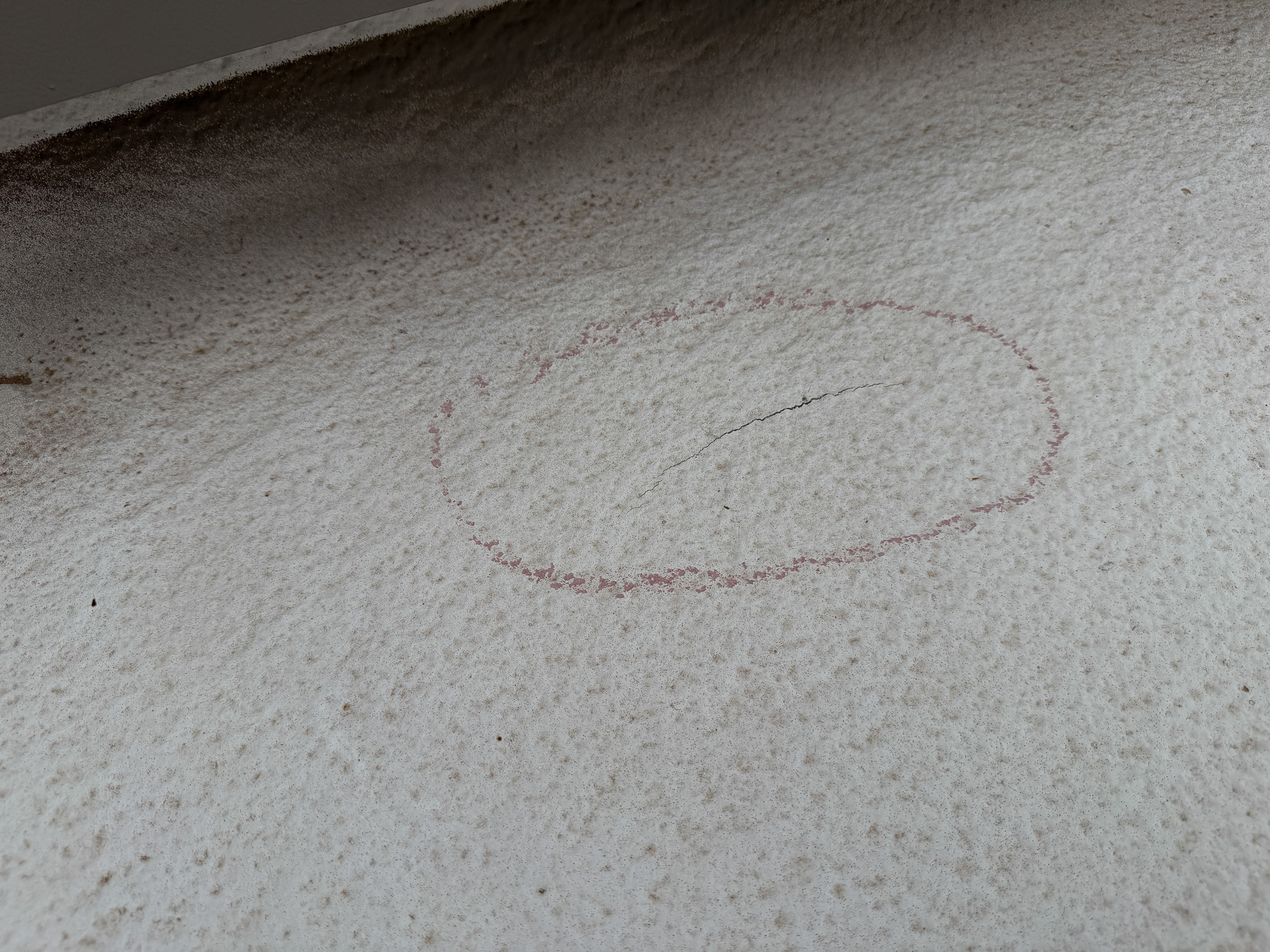
In this case, prolonged ponding, poor drainage and accumulated desert sediment had contributed to premature deterioration of the protective coating.
More importantly, this was no longer only a surface-coating problem. Water intrusion into portions of the existing SPF system was already present.
Once moisture has made its way into an SPF roof assembly, simply cleaning the surface and applying another coating does not remove the affected material or correct the conditions that allowed the intrusion to occur. Concealed wet or compromised foam can remain beneath what appears to be a newly finished surface.
That changed the conversation from maintenance to replacement.

Why Recoating Wasn’t the Right Solution
A maintenance recoat can be an excellent option when the existing foam remains dry, stable, properly bonded and correctly draining. SPF roofs are designed so their protective coating can be renewed throughout the life of the system.
But recoating this roof would have left two fundamental problems in place: portions of the existing foam had already experienced water intrusion, and the roof geometry responsible for the widespread ponding would still have been there.
A fresh white coating might have made the roof look new again. It would not have made it a new roof. For this home, Heirloom Roofing recommended a complete Troon North spray foam roof replacement so the existing system could be removed, affected materials could be eliminated and the drainage profile could be rebuilt from the substrate upward.
Rebuilding the Roof With 3-Inch SPF
Once the existing SPF was removed, we had the opportunity to do more than simply replace what had been there. We upgraded the home to a 3-inch spray polyurethane foam roofing system.
That additional foam thickness provided two significant advantages for this particular North Scottsdale home: improved thermal performance and much greater flexibility to correct the roof’s drainage profile. Closed-cell spray polyurethane foam typically provides approximately R-5.8 to R-6.9 per inch, depending on the specific product. At three inches, the new foam layer can therefore contribute roughly R-17 to R-21 of thermal resistance from the SPF itself.
That matters in Troon North.
During the Scottsdale summer, a low-slope roof receives hours of intense solar exposure while outdoor temperatures regularly reach triple digits. Heat absorbed at the roof is constantly trying to move toward the cooler interior of the home. Increasing the thermal resistance of the roof assembly helps slow that conductive heat transfer.
The 3-inch SPF system creates a continuous layer of insulation directly at the roof surface, without the joints and seams associated with many board-insulation systems. For a large low-slope home like this one, that additional thermal resistance helps reduce the amount of exterior heat reaching the building below and can support more stable interior temperatures and reduced demand on the cooling system.

We don’t present that as a promise of a specific utility-bill reduction because whole-home energy performance depends on many factors, including windows, walls, HVAC equipment, ductwork and the rest of the insulation package. But in the North Scottsdale climate, adding approximately three inches of closed-cell SPF to the roof is a meaningful thermal upgrade.
Correcting Drainage and Improving Roof Performance
The additional foam thickness was equally valuable from a drainage standpoint.
Because SPF is installed in place, we are able to vary its thickness across the roof rather than being locked into a completely uniform elevation. On this project, that gave us substantially more material to work with when rebuilding low areas and directing water toward the intended drainage locations.
That was one of the most important differences between the old roof and the new one. We were not simply spraying three inches of foam evenly across the entire house. The roof was evaluated section by section, with the foam profile built to improve drainage and eliminate the large, persistent ponding areas that had contributed to the premature deterioration of the previous system.
The goal was not to create an unrealistic surface where a drop of water could never remain after an Arizona monsoon. Spray foam naturally has some texture, and minor temporary ponding can occur. The goal was to make sure the roof behaved like a roof should, which means rainfall moves toward its drainage points instead of remaining across large portions of the surface for days.
Particular attention was also given to penetrations, transitions and perimeter conditions. This home incorporates nearly 644 linear feet of parapet wall, making those transitions a significant part of the overall roofing system.
The Finished Troon North Roofing System
Once the new 3-inch SPF profile was established, the roof received a complete protective coating system to protect the foam from North Scottsdale’s intense ultraviolet exposure and weather. The finished system gave the homeowner much more than a new white roof.
It provided a completely new spray polyurethane foam roofing system, removal of the moisture-compromised existing material, a rebuilt drainage profile, approximately three inches of continuous closed-cell insulation, newly detailed penetrations and transitions, a new protective weathering surface and a new service cycle for the home.
This project is a good example of why we spend time determining why a roof is failing before deciding how to repair it. The easiest proposal would have been to clean the existing roof, address the most obvious defects and apply another coating. That would also have left the underlying drainage problem in place.
Instead, the homeowner chose to correct the cause of the problem rather than continue treating its symptoms.
What This Troon North Spray Foam Roof Replacement Demonstrates
This Troon North spray foam roof replacement is a good example of why SPF roofing on North Scottsdale custom homes needs to be evaluated as a complete system. Foam thickness, drainage, insulation, penetrations, parapet transitions and the protective coating all have to work together for a low-slope roof to perform properly.
Homes throughout Troon North and other North Scottsdale communities such as Troon Village, Estancia, Desert Highlands and the Pinnacle Peak area often feature large roof areas, parapet walls and complex drainage conditions. Those architectural details make proper SPF installation, drainage design and ongoing roof maintenance especially important.
On this home, the objective was not simply to install another coating over an aging spray foam roof. Heirloom Roofing removed the compromised SPF system, rebuilt the drainage profile, installed approximately three inches of closed-cell spray polyurethane foam and applied a new protective coating system designed for the Scottsdale climate.
The result is a completely renewed spray foam roofing system with improved drainage, additional thermal resistance and a roof profile better suited to the demands of a North Scottsdale home.
Heirloom Roofing
Roofing. Refined.
Complete SPF Tear-Off & Replacement
3-Inch Closed-Cell SPF Roofing System
Drainage Profile Rebuilt for Improved Water Movement
Project Gallery